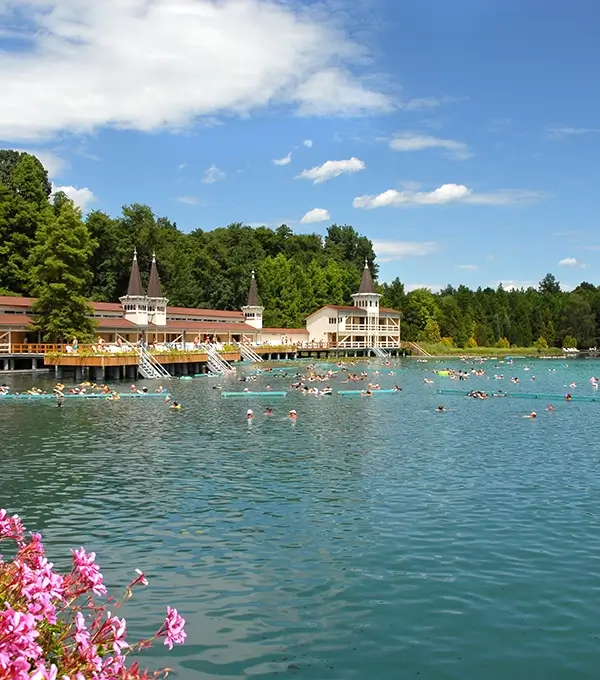
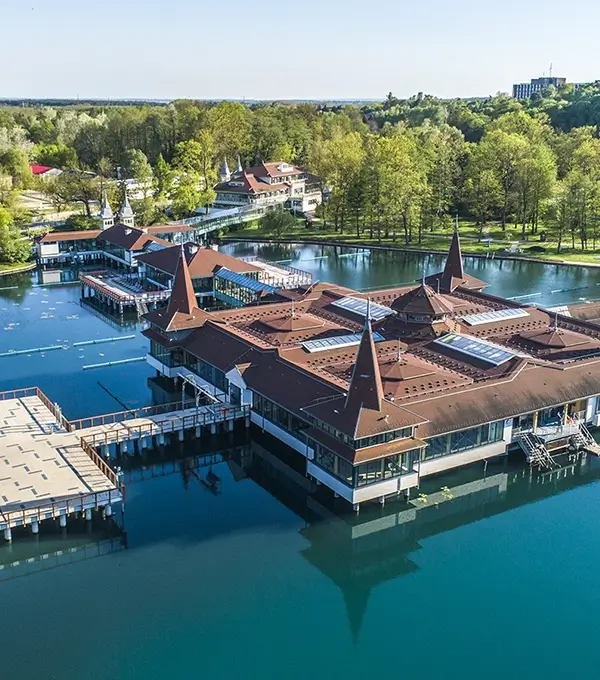
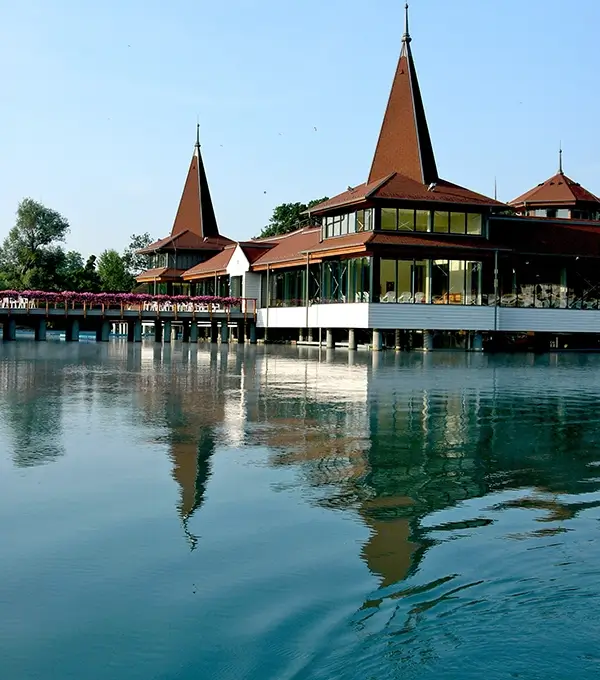
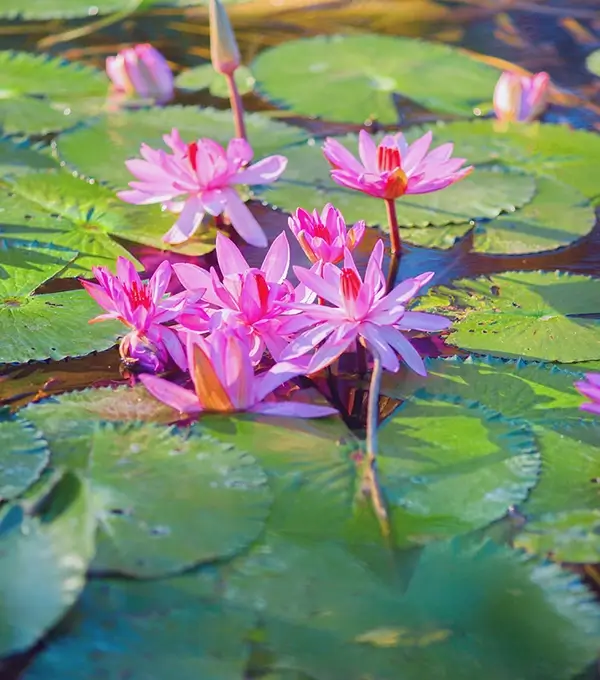
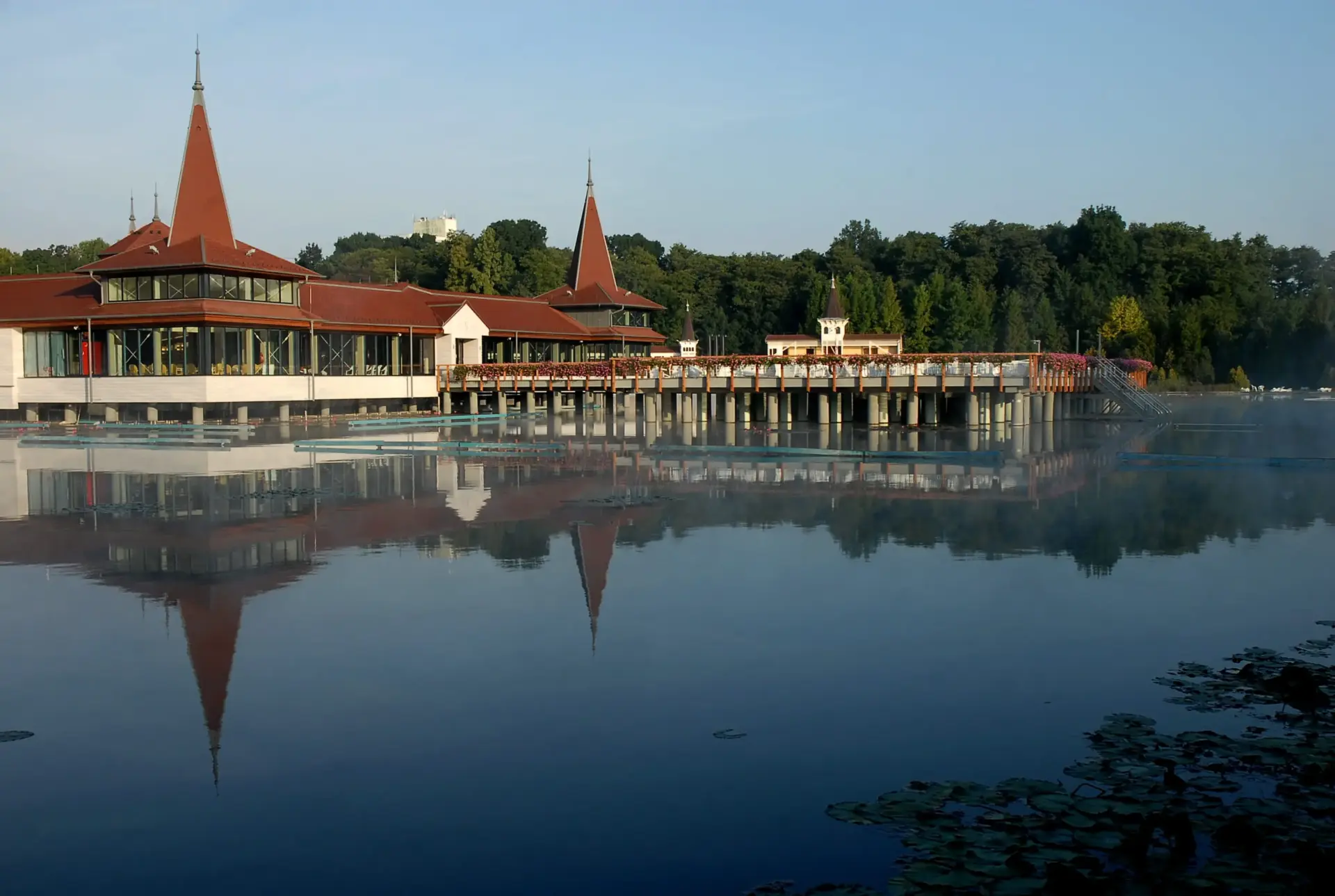
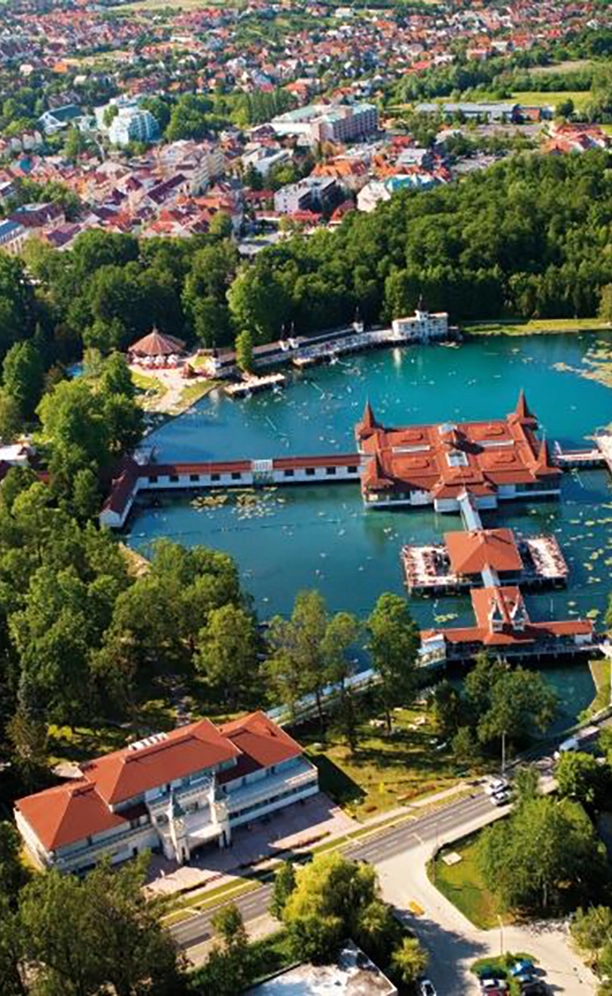
The name Hévíz is known worldwide for medicinal water, relaxation and recharging body and soul. The town’s greatest treasure is Lake Hévíz, Europe’s largest natural warm-water medicinal lake suitable for bathing, which has attracted people seeking healing and relaxation for centuries.
The healing effect of the lake was already known in Roman times, but organised spa life began to develop at the end of the 18th century thanks to the Festetics family. With the construction of the first bathhouses, Hévíz gradually became a spa resort of national and then international renown.
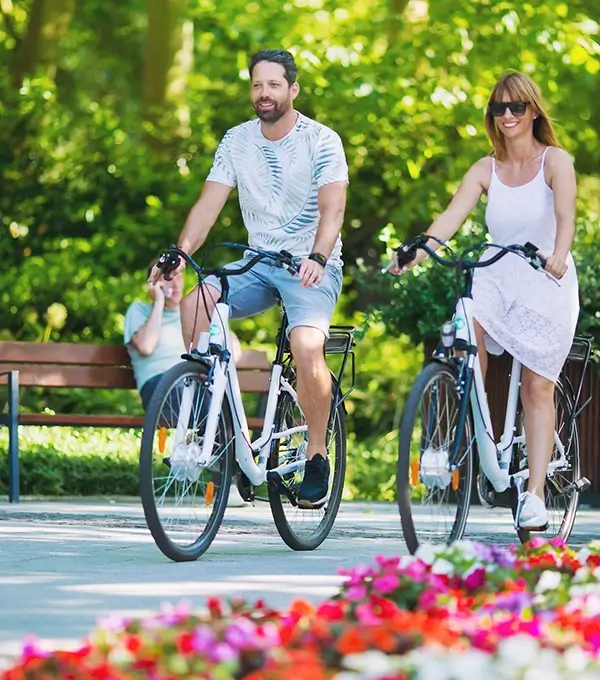
The town’s development has always been shaped by medicine and bathing culture based on thermal water, and these traditions are still alive today. Yet Hévíz is much more than a spa: charming pedestrian streets, green parks, cafés, restaurants and a wide range of programmes make it an attractive destination all year round. The surrounding countryside, nearby Lake Balaton and the Keszthely Hills offer plenty of opportunities for hiking and active leisure. In Hévíz, centuries-old bathing culture, modern health tourism and a peaceful small-town atmosphere come together in a unique way, making it an ideal place for regeneration, experiences and true revitalisation.
Indications for the spa cure
Before starting a spa cure, find out in which cases the use of medicinal water is recommended and in which cases it is not.
- degenerative, wear-related and calcifying musculoskeletal diseases
- inflammatory joint and spinal diseases in remission
- rheumatic complaints of muscular and ligament origin
- joint diseases associated with metabolic disorders, e.g. gout
- joint complaints associated with psoriasis
- rehabilitation after fractures, injuries and musculoskeletal surgery
- chronic peripheral nervous system complaints
- aftercare following joint and disc surgery
- chronic gynaecological conditions
Contraindications for the spa cure
- malignant tumours in the active treatment phase
- severe cardiovascular diseases
- acute inflammatory and infectious diseases
- severe haematological diseases
- frequent asthma attacks or fainting spells
- active ulcer, kidney failure, kidney stones
- severe liver disease
- weeping eczema, extensive wounds
- untreated hyperthyroidism or diabetes
- 6 weeks following therapeutic X-ray treatment
- pregnancy
Composition of Hévíz medicinal water
The calcium and magnesium content of the water comes from dolomite layers close to the surface, while its potassium, silicon and lithium content and, above all, its significant radium emanation – 0.22–0.28 millimicrocuries per litre – probably reach the rising water from the depths of Permian rocks lying beneath the Triassic layers. The lake water also contains sulphur compounds, of which only elemental sulphur and sulphide are worth mentioning, as these are absorbed by the body. However, the sulphur bacteria in the water also convert (reduce) the otherwise ineffective sulphate into elemental sulphur and sulphide, so part of it is also utilised. Some of the sulphur compounds come from the marsh vegetation and are constantly replenished, while others rise from the depths. If bathers stand still in the lake for a few minutes, their bodies become covered with countless bubbles. This is carbon dioxide dissolved in the water, i.e. carbonic acid, which is characteristic of the last stage of post-volcanic activity (‘acidulous springs’). Besides these, methane is another important dissolved component of the almost neutral water (pH 7.16). This constantly renewing spring, which always supplies fresh substances, therefore combines the beneficial properties of carbonated and sulphurous waters and micro-dose radium emanation, which sets it apart from other spa resorts in Hungary.
The wells drilled in the immediate vicinity of Lake Hévíz – which supply the hospital and the larger hotels – provide essentially the same ‘mixed’ type of water as the lake itself, only in a different mixing ratio. The wells supply water at 39–42 °C with a significantly higher sulphur content (5–6 mg/l) than the lake.
The mud
It contains 80% inorganic and 20% organic matter. Lime predominates among the mineral components, accounting for 60% of the dry matter. Besides limestone, quartz, feldspar, mica and amphibole can be identified. These tiny, sharp crystals play an important role in stimulating the skin. Chemical analysis of the mud has identified sulphate, hydrogen carbonate, chloride and iodine compounds of calcium, sodium, magnesium, silicon, iron, aluminium and titanium among its inorganic substances. The radium salts and reduced sulphur compounds in the mud are particularly valuable healing factors. The radium content of Hévíz medicinal mud, acting deep within the body, is considered to support metabolism, stimulate glandular function, calm the nervous system and help cell function in the direction of healing. Hévíz peat mud has the highest radon content of all muds in Hungary.
Check out our current offers!
DetailsGetting here
From Budapest, take the M7 motorway towards Balatonszentgyörgy, then continue via Keszthely to Hévíz. From Sopron, follow main road 84.
Special ingredients
The medicinal water of Lake Hévíz has a special composition: it contains calcium, magnesium, potassium, silicon and lithium, as well as sulphur compounds and dissolved gases. Its almost pH-neutral water is fed by a constantly renewing spring. Wells near the lake supply medicinal water of similar composition at 39–42 °C, with a higher sulphur content.
The lake’s valuable medicinal mud consists of 80% inorganic and 20% organic matter; its mineral components are mainly lime, together with calcium, magnesium, iron and silicon. Thanks to its special composition and good heat retention, it is one of the key elements of the traditional Hévíz cure.
Our offers
New Year’s Eve, Európafit style: a gala dinner with all-inclusive drinks, evenings with live music, a soup lunch on New Year’s Eve, New Year’s Day brunch and a lively house-party atmosphere. Ádám Solti and Midlife Crisis will help you see out the year in unforgettable style.
Steaming thermal water, relaxing wellness experiences and delicious food await. Discover our autumn special offers: extra discounts for children and discounted Deluxe room rates!
Our senior guests can enjoy a peaceful, health-focused stay in Hévíz with attentive service. Therapeutic thermal water, wellness experiences and active leisure help you recharge and recover.
Celebrate 23 October, the autumn school holiday and Halloween weekend with a host of activities! Enjoy performances by Bebe and Kalap Jakab, puppet theatre, space adventures and much more. Children’s activities, unlimited access to our wellness facilities and generous half board await!
Autumn is the perfect time to recharge! Enjoy steaming thermal water, delicious food, warm saunas and carefree relaxation. On selected dates, take advantage of extra discounts for children and discounted Deluxe room rates!
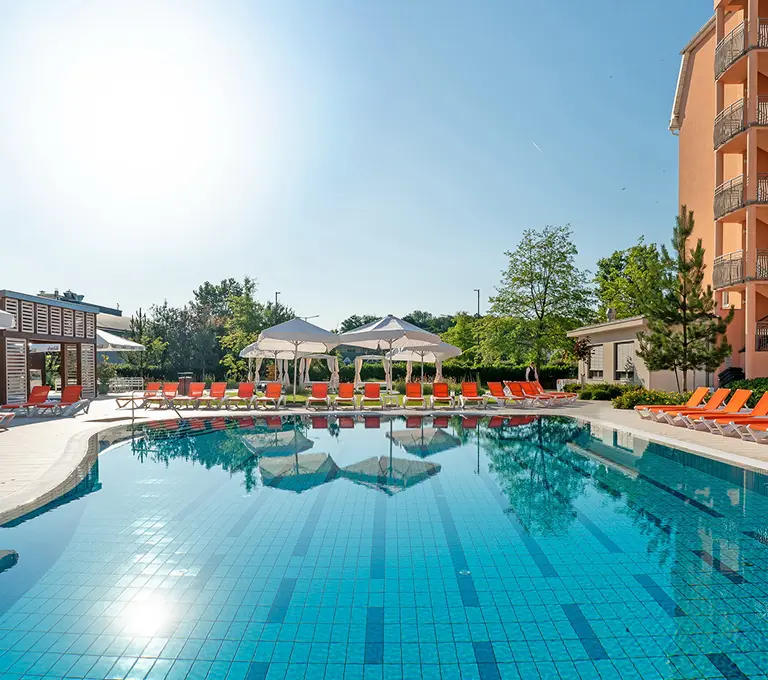
Make the most of our discounted autumn offer! Enjoy a stay of just one night or more in four-star comfort, with generous half board, a two-level sauna area, pools and unlimited access to our wellness facilities.
It’s time to bring body and mind back into balance. Yoga, mindful movement, wellness experiences and peaceful surroundings will help you slow down, recharge and take a break from everyday life.
Spend Christmas and the days between Christmas and New Year in Hévíz! Enjoy heartwarming moments, festive flavours, evenings with live music, Christmas activities and carefree relaxation for the whole family.
A preventive health package featuring elements of the Traditional Hévíz Cure, five treatments, a medical consultation and the option to claim the cost through a health fund—supporting an active, healthy everyday life.
Join us at Európafit for a special wine adventure! During our weekend with Bujdosó Winery, discover the world of Balaton wines through exciting tastings and flavourful experiences, alongside wellness and fine dining.
Bavarian flavours and exceptional dining experiences in Hévíz! Spend the weekend with us and savour Bavarian dishes created together by chefs Frigyes Vomberg and András Gumhert!
Take it easy with our gentle cure package: 1 treatment a day, a specialist examination and unlimited use of the pool and sauna area for complete relaxation.
A cure package for your complete well-being: 2 treatments a day, a specialist examination and a varied programme of free leisure activities for real relaxation.
For your recovery
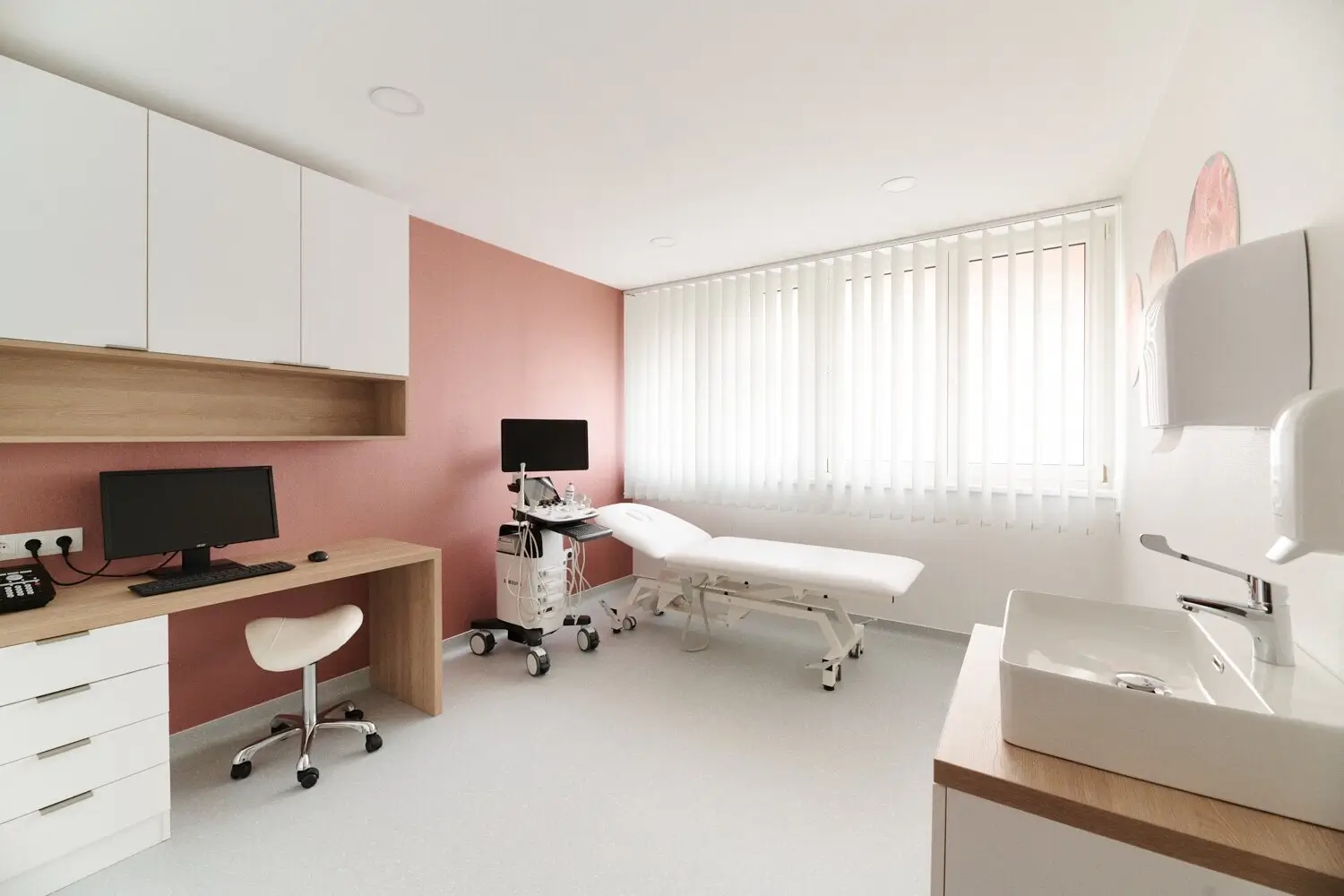
Therapists, masseurs, physiotherapists, dispatchers – and many others who help our guests on their path to recovery every day with expertise and care. They work so that our guests can move more freely again, feel better and regain what is perhaps most important: their health and freedom of movement.